
Many travellers hesitate when they see their trip coincides with Ramadan in Morocco. Will everything be closed? Will I be able to eat? Is it even worth going?
Having experienced the holy month in Morocco firsthand – twice – our answer is a resounding yes. While the pace of life shifts significantly, visiting during Ramadan offers a window into the country’s soul that you simply won’t see at any other time of year.
Here is everything you need to know about traveling to Morocco during this sacred month.
What is Ramadan?
Ramadan is the ninth month of the Islamic calendar, observed by Muslims worldwide as a month of fasting, prayer, reflection, and community.
In Morocco—where the population is over 99% Muslim—this period is the most significant event of the year.
From sunrise to sunset, practicing Muslims abstain from:
- Food and drink (including water).
- Smoking and tobacco use.
- Intimate activity.
When is Ramadan in Morocco?
The dates of Ramadan shift annually because the Islamic calendar is lunar, not solar. This means Ramadan moves forward by approximately 10-11 days each year in relation to the Gregorian calendar.
Planned Dates for Ramadan:
- Ramadan 2026: Expected to begin around February 16th, 2026 and end around March 17th, 2026. Eid al-Fitr (the celebration marking the end of Ramadan) would then fall around March 18th-20th, 2026.
- Ramadan 2027: Expected to begin around February 6th, 2027 and end around March 7th, 2027. Eid al-Fitr would then fall around March 8th-10th, 2027.
Please note: These dates are estimations and subject to the sighting of the new moon. It’s always advisable to confirm local timings closer to your travel date.
Ramadan in Morocco
In Morocco it was officially announced that the first day of Ramadan 2026 is
Thursday, February 19, 2026. This decision followed the sighting of the crescent moon on the evening of Wednesday, February 18, 2026, marking the start of the holy month of Ramadan in Morocco.
In Mecca (Saudi Arabia) Ramadan officially started on Wednesday, February 18, 2026. The Supreme Court of Saudi Arabia confirmed that the crescent moon was sighted on the evening of Tuesday, February 17, 2026.
- Tip: When planning a trip during Ramdan in Morocco, do be aware that the official dates are confirmed only on sighting of the new moon in Mecca (Saudi Arabia).

Should You Still Visit During Ramadan in Morocco?
Absolutely. While there are logistical hurdles, the rewards are immense. You’ll witness a beautiful sense of community, enjoy festive evenings, and experience the ‘Iftar’ (the breaking of the fast) every evening which is a feast for the senses.
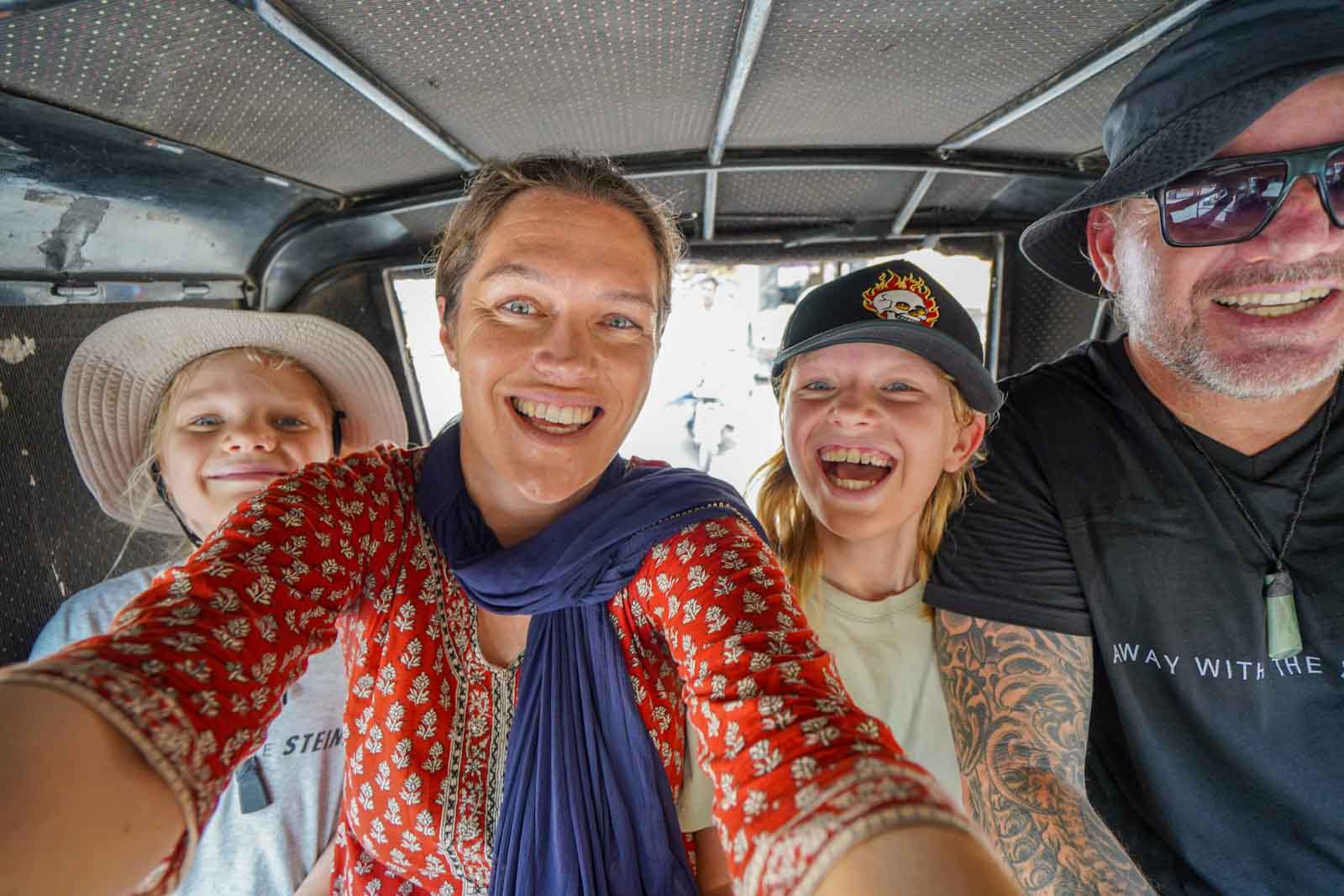
We have spent Ramadan in Morocco twice and can truly say it is an incredible time to visit. We learnt a lot and the hospitality and community during Ramadan gave us an entirely new appreciation and respect for culture and for the kindness of people we meet in our travels.
Who is Expected to Fast?
Fasting (Sawm) is one of the Five Pillars of Islam. In Morocco, all healthy adult Muslims are expected to abstain from food, drink, tobacco, and intimacy from dawn (Fajr) until sunset (Maghrib).
There are specific groups traditionally exempt from fasting, including:
- Children who have not reached puberty.
- The elderly or those with chronic illnesses.
- Pregnant or breastfeeding women.
- Travellers on a long journey (though many choose to make up the days later).
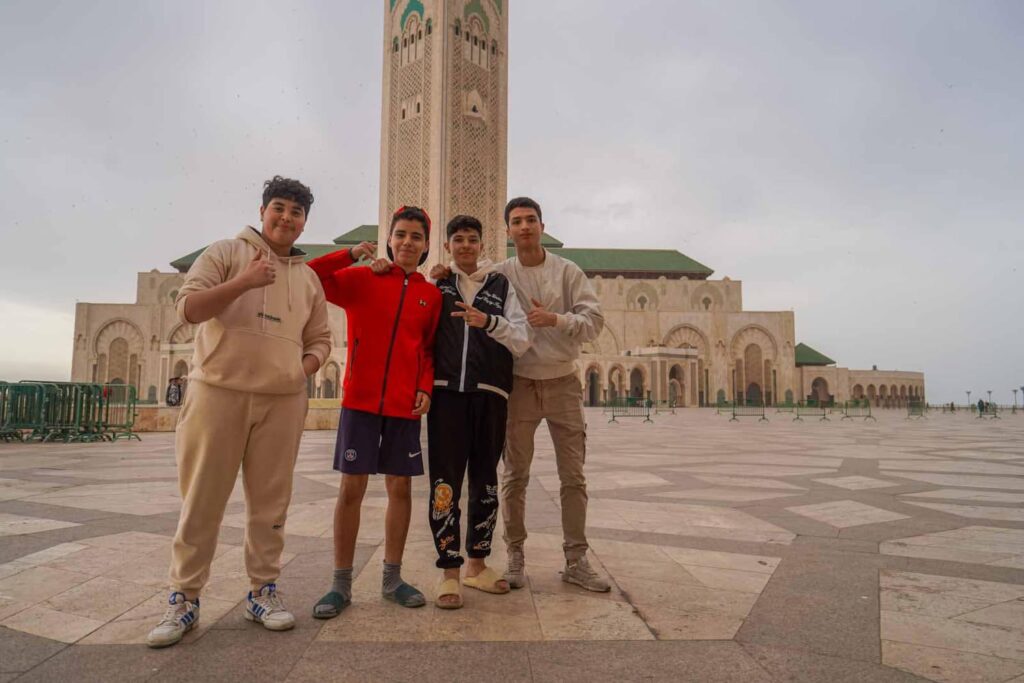
Do Visitors Need to Fast?
No. As a non-Muslim visitor, you are not expected to fast.
Moroccans are famously hospitable and understand that you do not share their religious obligations. You will find that many restaurants in tourist hubs like Marrakech, Essaouira, and Fes remain open to serve travellers behind discreet curtains or on shielded terraces.
As a Visitor During Ramadan in Morocco
While you aren’t fasting, public decorum is essential. Eating, drinking water, or smoking openly on the street is considered highly disrespectful.
Think of it as being a ‘good houseguest’—you wouldn’t feast in front of someone who hasn’t had a drop of water in twelve hours.
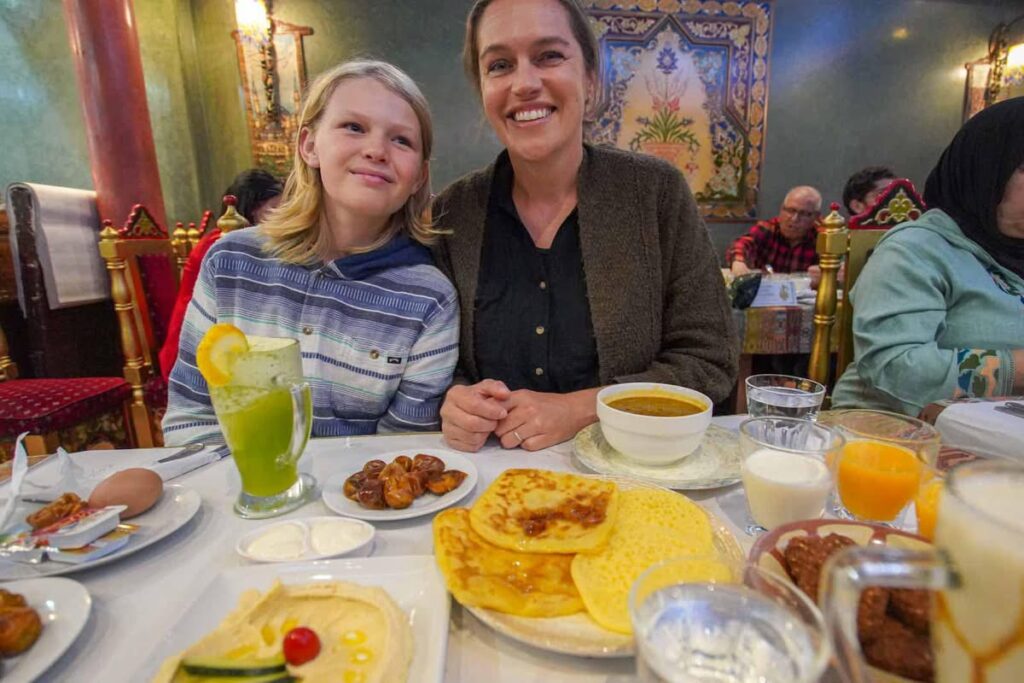
Tips for Visitors
Don’t be surprised if a Moroccan friend or host offers you tea or food during the day. While they are fasting, their tradition of hospitality remains a priority.
It is okay to politely decline if you want to show solidarity, but it is also perfectly acceptable to accept if they insist on serving you in a private setting.
- Plan your lunch: Use Google Maps or ask your Riad host for a list of tourist-friendly spots open during the day.
- The Iftar Rush: Around sunset, the streets empty as everyone heads home to break the fast. Aim to be off the road and settled by this time.
- Join the Feast: If a local invites you for Iftar (the evening meal), accept! It is a beautiful experience of Harira soup, dates, and genuine Moroccan warmth.
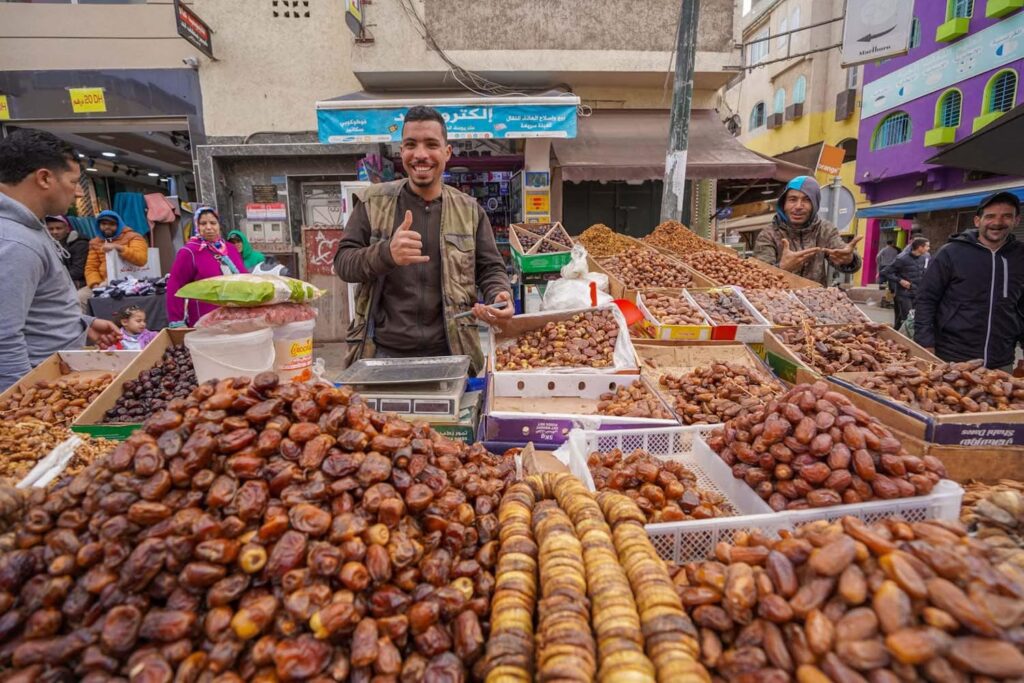
Iftar: Ramadan in Morocco
The Iftar meal is a cornerstone of the Ramadan experience. It’s a joyful breaking of the fast in the evening at sunset, often started with dates and milk (or water), followed by harira (a hearty lentil and tomato soup), chebakia (honeyed sesame cookies), and a variety of other Moroccan dishes.
After the initial break, a more substantial meal is usually consumed.
Many hotels and restaurants will specifically advertise Iftar Menus. Don’t hesitate to ask your accommodation for recommendations or if they offer Iftar. Participating in an Iftar, even as an observer, is a beautiful way to connect with Moroccan culture and hospitality.
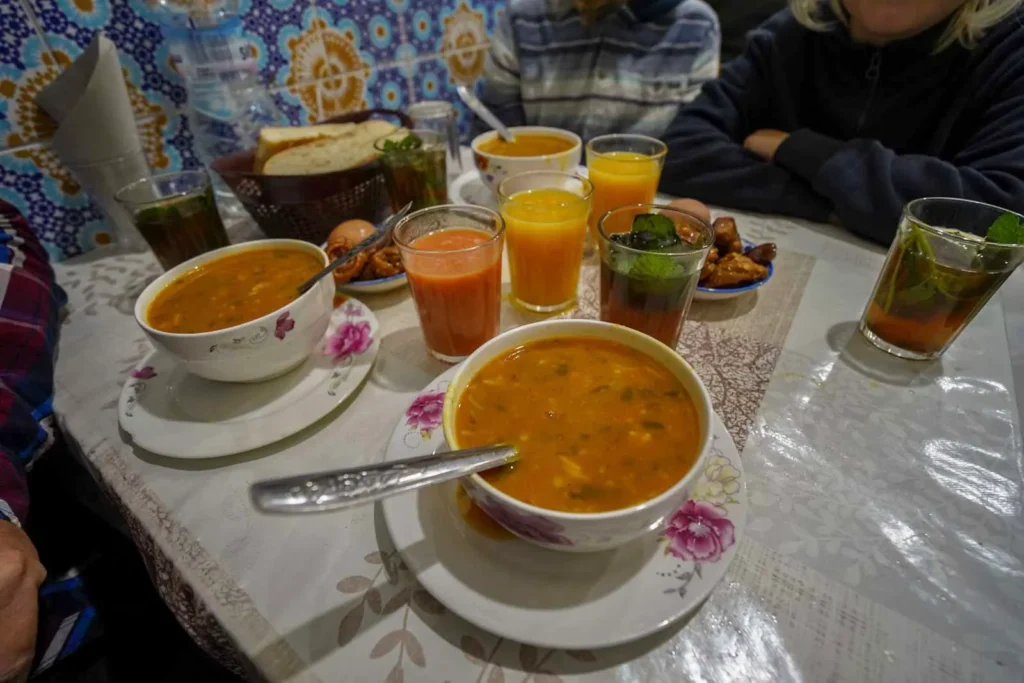
Invited to Iftar
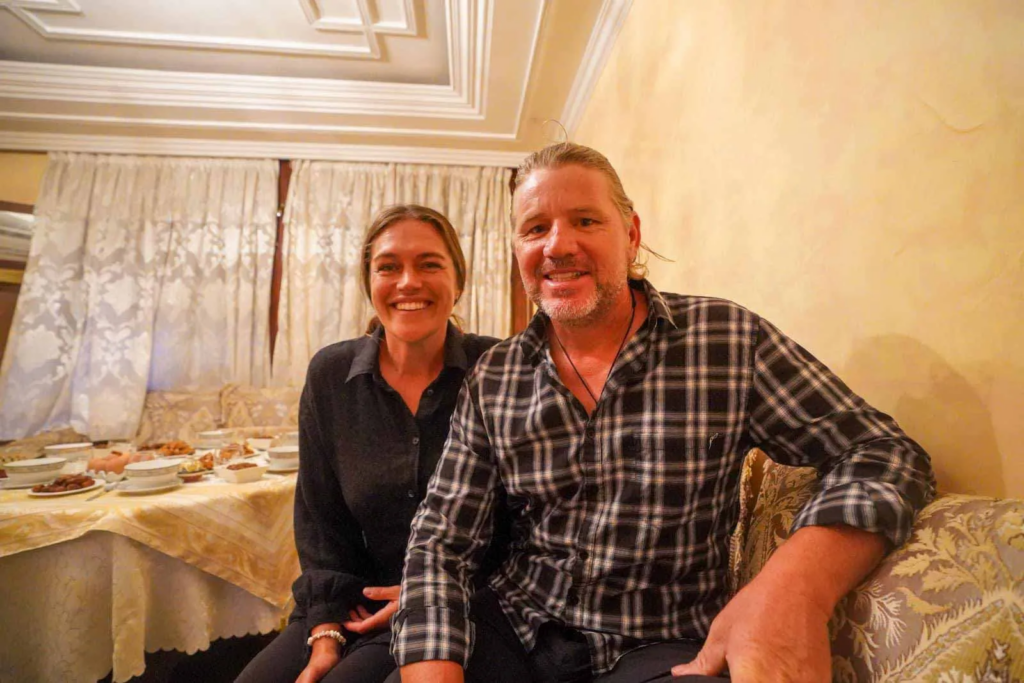
On our first Ramadan in Morocco we were invited for Iftar with friends in Casablanca. We had never experienced Iftar before but it remains to this day one of our most special experiences of travel in Morocco.
The afternoon is all about preparation for the Iftar meal.
The boys and I went with the ladies to the market to get sweets and vegetables for the meal and Gavin got meat from the local butcher. We spent the afternoon with Hasna and her family preparing food and learning all about it.
It was also our first time fasting for the day. We didn’t have to. But that as well was a humbling experience to be part of.
The Maghrib Call to Prayer
At sunset, we could hear the Maghrib call to prayer from their home. We broke the fast with some dates and Harira (soup). Then we walked with them as the men in the family went to pray outside the mosque in a huge gathering.
It is an incredibly spiritual and communal event.
If you get the chance to experience it and are invited to Iftar during Ramadan in Morocco – grab that opportunity!
Eid al-Fitr: Ramadan in Morocco
The end of Ramadan is marked by Eid al-Fitr, a three-day national holiday. This is a time of immense celebration, family gatherings, gift-giving, and feasting.
If you happen to be in Morocco during Eid, you’ll witness the joyous atmosphere firsthand.
The Practicalities: What Changes for Ramadan in Morocco?
It’s a wonderful time, but be prepared for limited services and plan your travel accordingly.
- Business Hours Most businesses adopt continuous hours, typically opening around 9:00 AM and closing early at 3:00 PM. On Fridays, many shops do not reopen after the midday prayer.
- The Sunset Rush The hour before sunset is the most chaotic time on the roads. Everyone is rushing home to be with their families for Iftar. Avoid taking taxis or being on the road during this hour. For about 30-60 minutes after the sunset cannon fires, the streets will be eerily silent as the entire nation sits down to eat.
- Travel Impact: Transportation services might be very busy in the days leading up to and during Eid as people travel to visit family. Many businesses will close for at least the first day of Eid, some for the entire three days.
- Eating as a Tourist In major tourist hubs like Marrakech or Fes, many restaurants catering to travellers remain open during the day. However, in smaller towns, you might find options limited until sunset.
Be discreet. While you aren’t expected to fast, eating or drinking a bottle of water in front of those who are is considered disrespectful. Find a quiet corner or eat inside your Riad.
Cultural Highlights: Ramadan in Morocco
There are some cool and cultural experiences to be part of during Ramadan in Morocco.
- The Medfaa (Cannon): In many Moroccan cities, a cannon is fired to signal the exact moment of sunset. It’s an iconic sound that marks the start of the evening festivities.
- Iftar (Ftour) Food: This is the meal that breaks the fast. In Morocco, it traditionally starts with water and dates, followed by Harira(a hearty lentil and tomato soup), Chebakia (honey-coated cookies), and fresh juices.
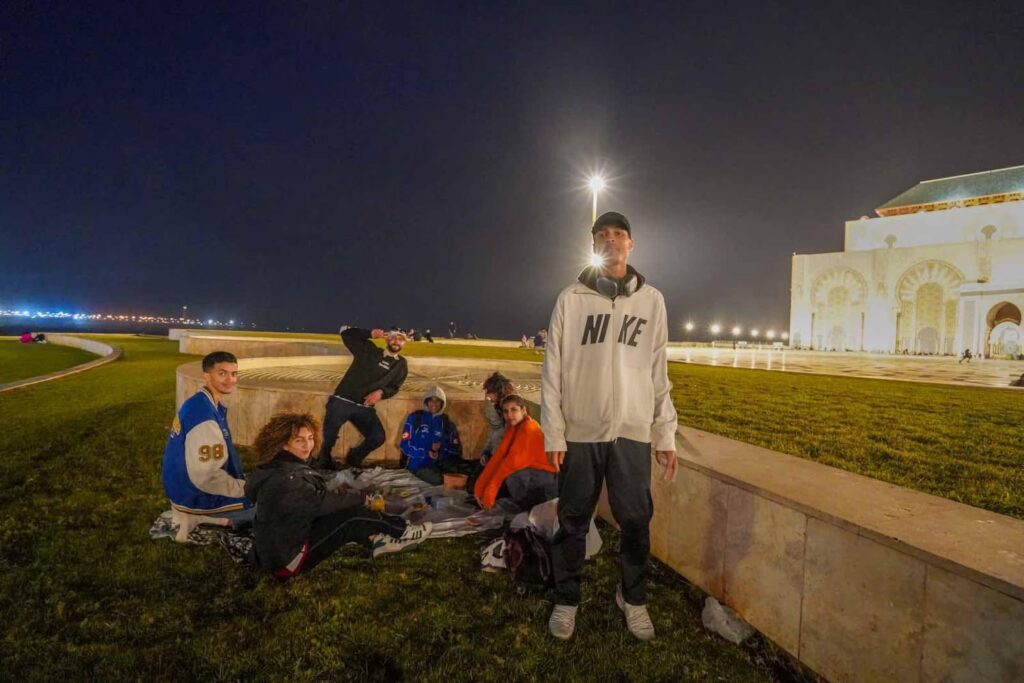
- The Nightlife: After Iftar, the cities come alive. Shops reopen, the streets buzz with energy, and people stay out late into the night. It is a vibrant, celebratory atmosphere.
Tips: Ramdam in Morocco
We loved this time in Morocco. But there are a few tips to make travel during Ramadan in Morocco a smoother trip as a visitor:
- Learn the Greetings: Use ‘Ramadan Mubarak’ (Blessed Ramadan) or ‘Ramadan Kareem’ (Generous Ramadan) to show respect to locals.
- Dress Modestly: Morocco is already conservative, but during Ramadan, it is especially important to dress respectfully (covering shoulders and knees).
- Plan Your Transport: Trains and buses still run, but schedules may be slightly reduced. Book your tickets in advance.
- Experience an Iftar: If you are invited to join a family for Iftar, say yes! It is the ultimate Moroccan hospitality experience.
What to See and Do During Ramadan in Morocco
Ramadan in Morocco differs depending on where you are in the country.
In the cities, it is more adapted to tourists and visitors during this time. But in the smaller towns and villages things shut down a bit more.
Marrakech
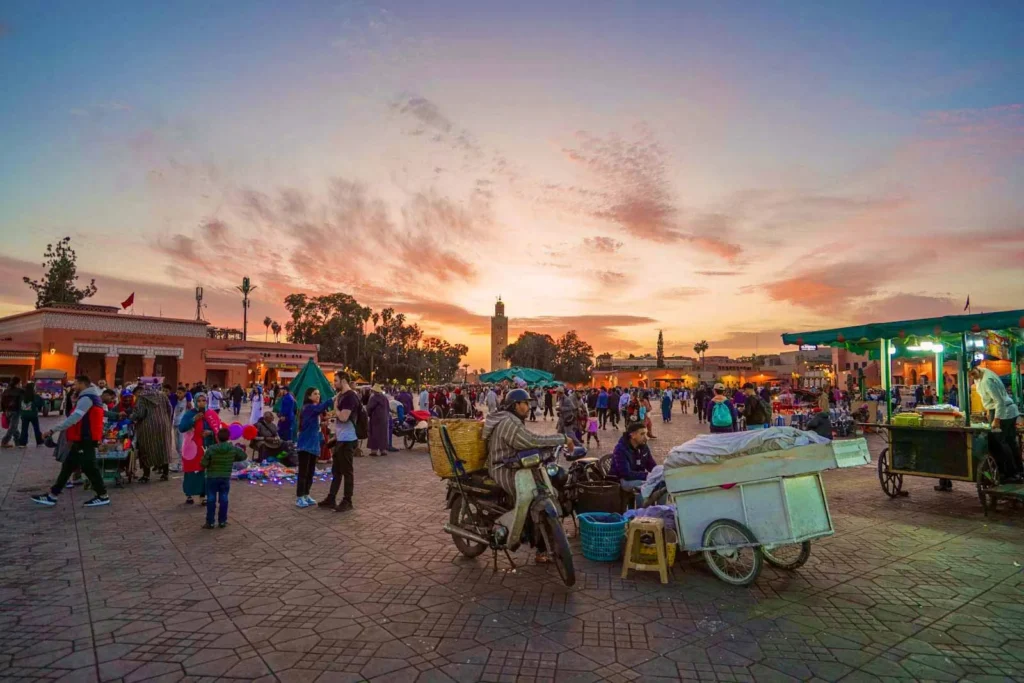
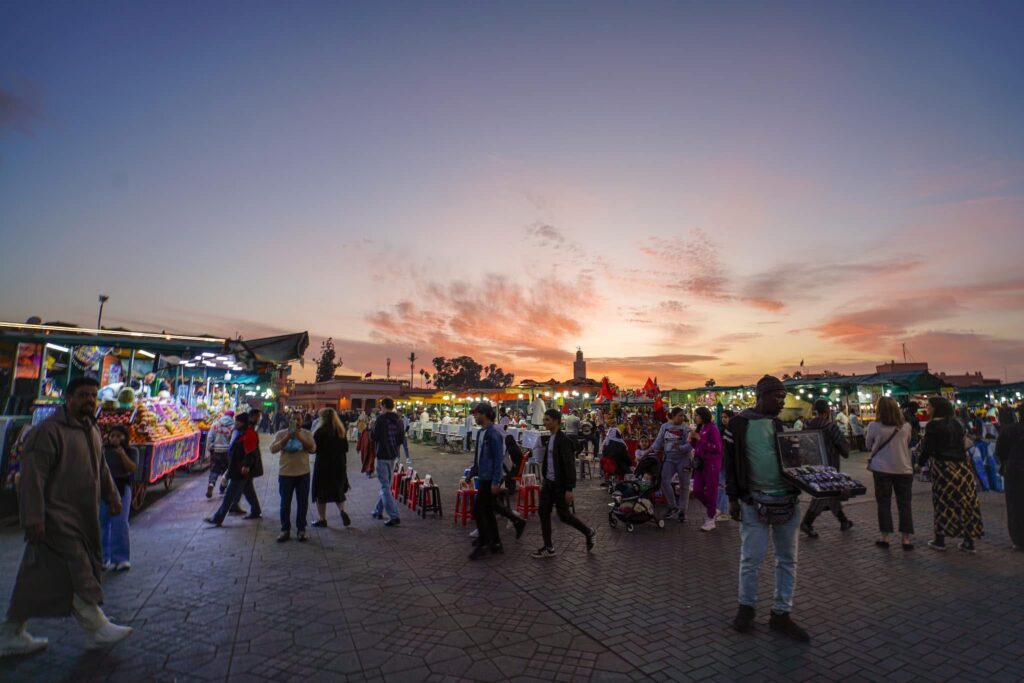
Marrakech during Ramadan is a city that pulses with a different kind of energy. The daytime heat and fast mean a slightly quieter Djemaa el-Fna, but as evening approaches, the square transforms.
- Daytime: Explore the tranquil Bahia Palace or wander through the less crowded Jardin Majorelle. The souks will be open but might be less bustling. Use this time for peaceful exploration.
- Evening: Head to Djemaa el-Fna after Iftar. It erupts with life – storytellers, musicians, snake charmers, and food stalls (though less extensive than usual) all reappear. Many restaurants surrounding the square will offer special Iftar menus.
- Iftar Experience: Seek out a traditional riad or a restaurant with a rooftop terrace overlooking the Koutoubia Mosque for a memorable Iftar.
Fes: Ramadan in Morocco
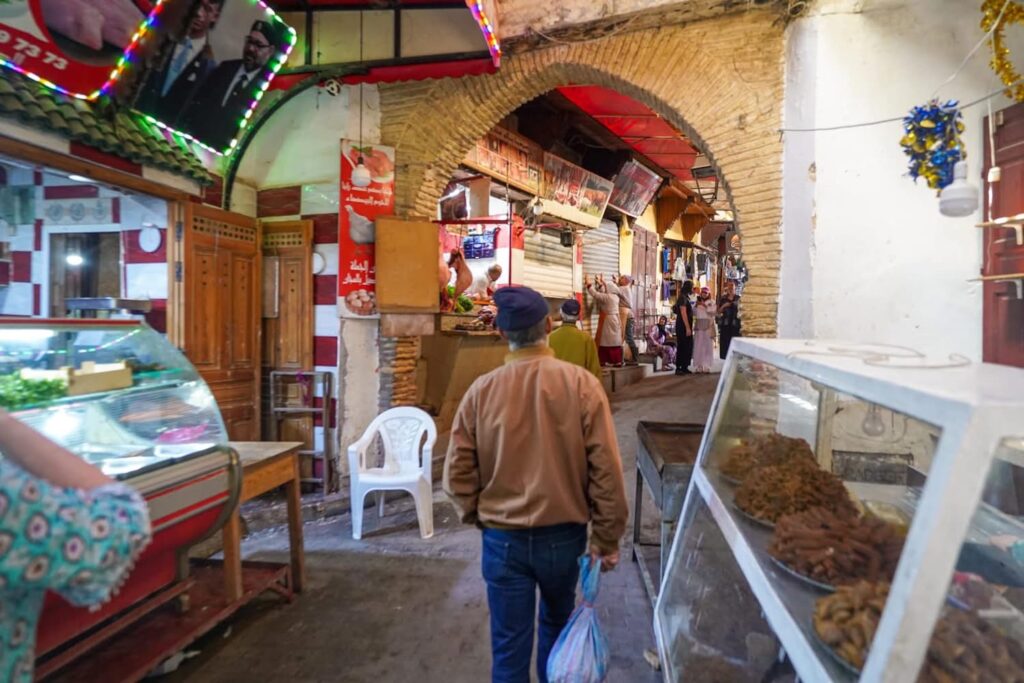
Fes, with its ancient medina, feels even more steeped in tradition during Ramadan.
- Daytime: Get lost in the labyrinthine alleys of the Fes el-Bali medina. Visit the Chouara Tannery (the scent might be less intense due to fewer active days). The Al-Attarine Madrasa and Bou Inania Madrasa offer serene beauty.
- Evening: After Iftar, the medina comes alive with families strolling. Many bakeries and sweet shops will be busy preparing traditional Ramadan treats. Look for sellou (a nutritious sweet mix) and various pastries.
- Iftar Experience: Many guesthouses and hotels in Fes specialize in excellent traditional cuisine and will prepare elaborate Iftar meals.
Chefchaouen: Ramadan in Morocco
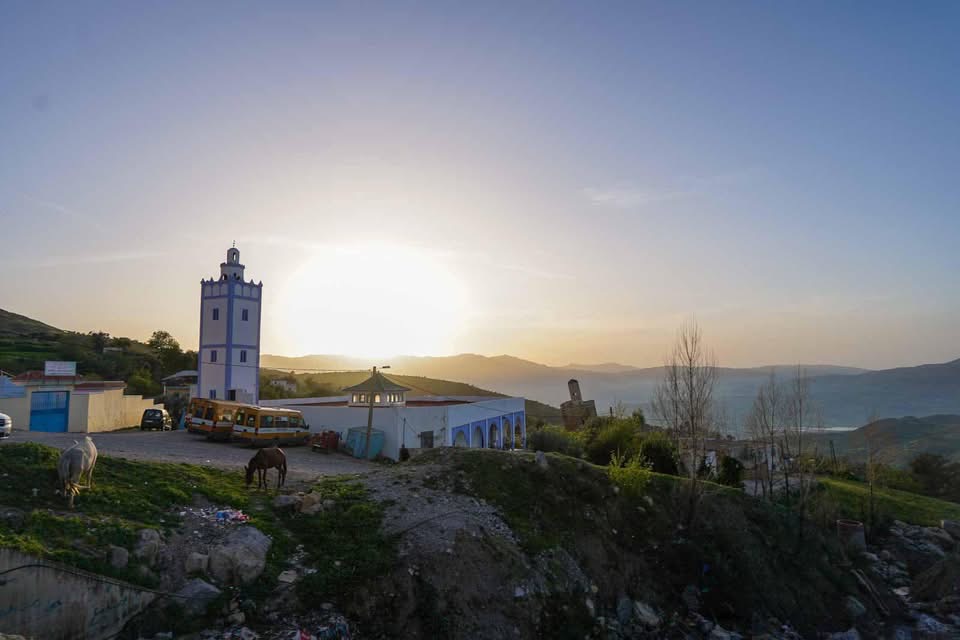
The Blue Pearl of Morocco offers a tranquil retreat, and even more so during Ramadan.
- Daytime: Enjoy the peaceful blue streets, take stunning photographs, and hike in the nearby Rif Mountains (be sure to carry your water for private consumption). The medina will be very quiet.
- Evening: After Iftar, the main square (Place Outa el Hammam) fills with locals enjoying the cooler evening air. Cafes will open, and families will gather.
- Iftar Experience: Many small guesthouses (dars) offer homemade Iftar, providing an intimate experience.
Essaouira: Ramadan in Morocco
The coastal town of Essaouira offers a refreshing break, especially if Ramadan falls during warmer months.
- Daytime: Stroll along the ramparts, explore the fishing port, or walk on the beach. Many art galleries and boutique shops will maintain regular hours.
- Evening: Enjoy fresh seafood for Iftar at one of the many restaurants along the port or in the medina. The atmosphere is generally relaxed and pleasant.
- Iftar Experience: Look for restaurants offering grilled fish and local specialties.
Sahara Desert (Merzouga/Zagora)
A desert trip during Ramadan can be a profound experience.
- Daytime: Enjoy the solitude of the desert. The heat can be intense if Ramadan falls in summer, so plan your activities accordingly. Many desert camps are accustomed to international tourists and can provide discreet meals and drinks.
- Evening: The vast, star-filled sky takes on an even more magical quality. Breaking fast in the desert, perhaps with Berber hospitality, is unforgettable. The quietness of the desert amplifies the spiritual aspect of Ramadan.
- Iftar Experience: Desert camps will usually provide a special Iftar meal for their guests, often a mix of traditional Moroccan and Berber dishes.
Shopping During Ramadan
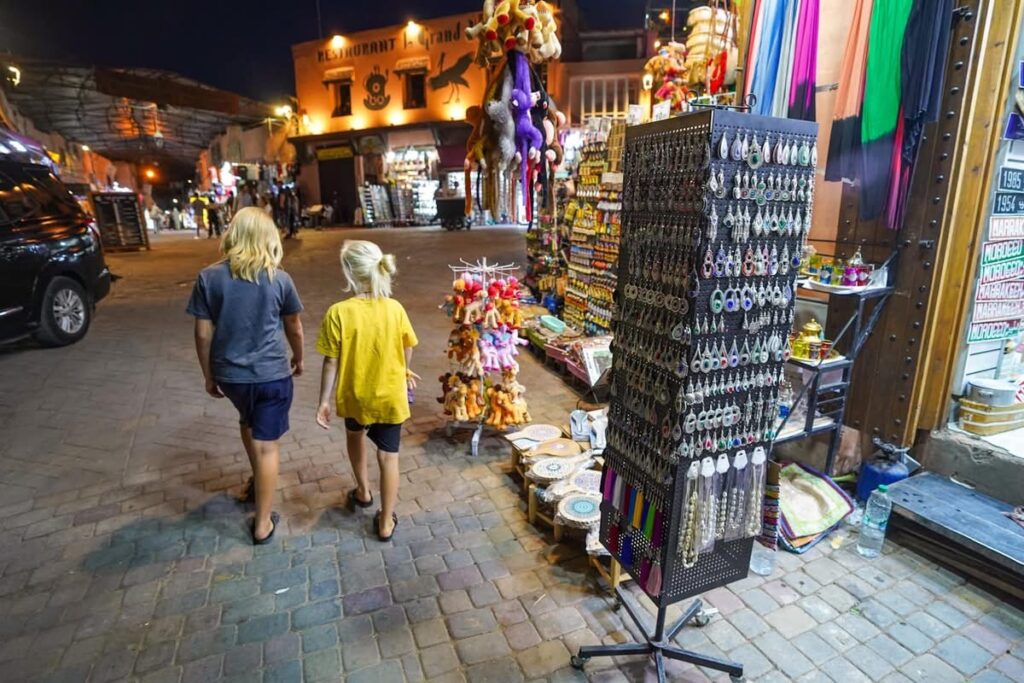
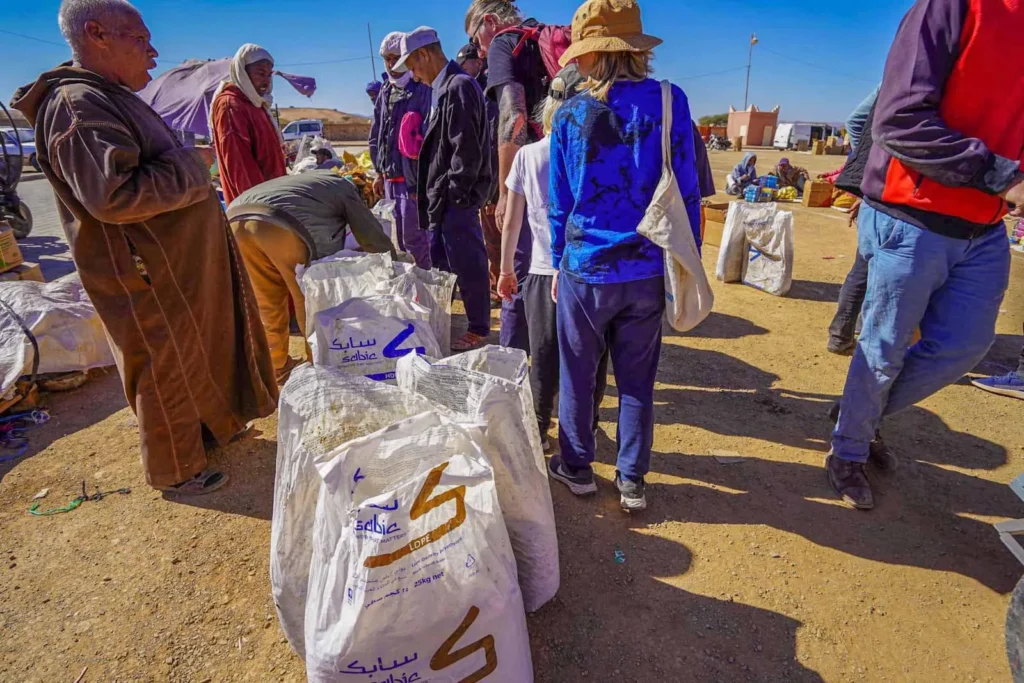
Shopping in the souks can be an interesting experience. You might find fewer vendors actively calling out, and a more relaxed pace.
Many shops will close for a few hours in the afternoon for a break and then reopen in the evening, sometimes staying open quite late. This can be a great time for some unhurried browsing. Bargaining is still expected, but always with a respectful and friendly demeanour.
Transportation During Ramadan
This generally just requires a bit of forethought and planning ahead, though don’t be put off.
Transport for tourists is pretty mainstream these days – even during Ramadan.
- Grand Taxis/Petits Taxis: Generally available, but drivers may be tired, especially close to Iftar. Be patient.
- Buses (CTM/Supratours): These intercity buses usually run on their normal schedules. However, try to avoid travel right around Iftar time if possible, as there might be a rush to get home.
- Trains (ONCF): Trains are a comfortable option and generally adhere to their schedules.
- Private Drivers/Tours: Often the most convenient option, as your driver can be more flexible and aware of your needs as a non-fasting traveller. Confirm with your tour operator how they manage meal breaks for themselves during Ramadan.
Our Verdict?
Traveling during Ramadan in Morocco requires a little extra planning and a lot of patience. However, if you approach it with an open mind and a respectful attitude, you will be rewarded with a deeply authentic and moving travel experience.
We absolutely loved it and really appreciated the chance to learn about Ramadan and to experience it first-hand.
If you get the chance to be invited for Iftar – grab that opportunity!
Eid Mubarak! (The celebration marking the end of Ramadan).
Planning Travel to Morocco & Beyond
These are the companies we use while traveling fulltime (for five years now) and ones that we would recommend to anyone booking travel to Morocco.
- Booking.com – The best all-around accommodation booking site that constantly provides the cheapest and lowest rates. They have the widest selection of budget accommodation and it’s easy to filter and sort into price and availability with all the extras you are looking for personally.
- Skyscanner– This is by far our favourite flight search engine. They are able to search small websites and budget airlines that larger search sites often miss. We book all our flights through Skyscanner.
- GetYourGuide– Get Your Guide is a huge online marketplace for tours and excursions offered all around the world including everything from walking tours, to street-food tours, cooking classes, desert safari’s and more!
- SafetyWing – A global travel insurance that covers people from all over the world while outside their home country. You can buy it short or longterm; and even if you are out of the country.
- World Nomads – Travel insurance tailored for longterm travel and nomads (including those who have already left home). Make sure you have insurance before embarking on your Morocco itinerary!
Hi! I’m Sarah. I am the self-confessed dreamer, travel-schemer and the main editor behind this blog. I love to write, and it is a dream come true to share so many experiences together and inspire others in our stories.