
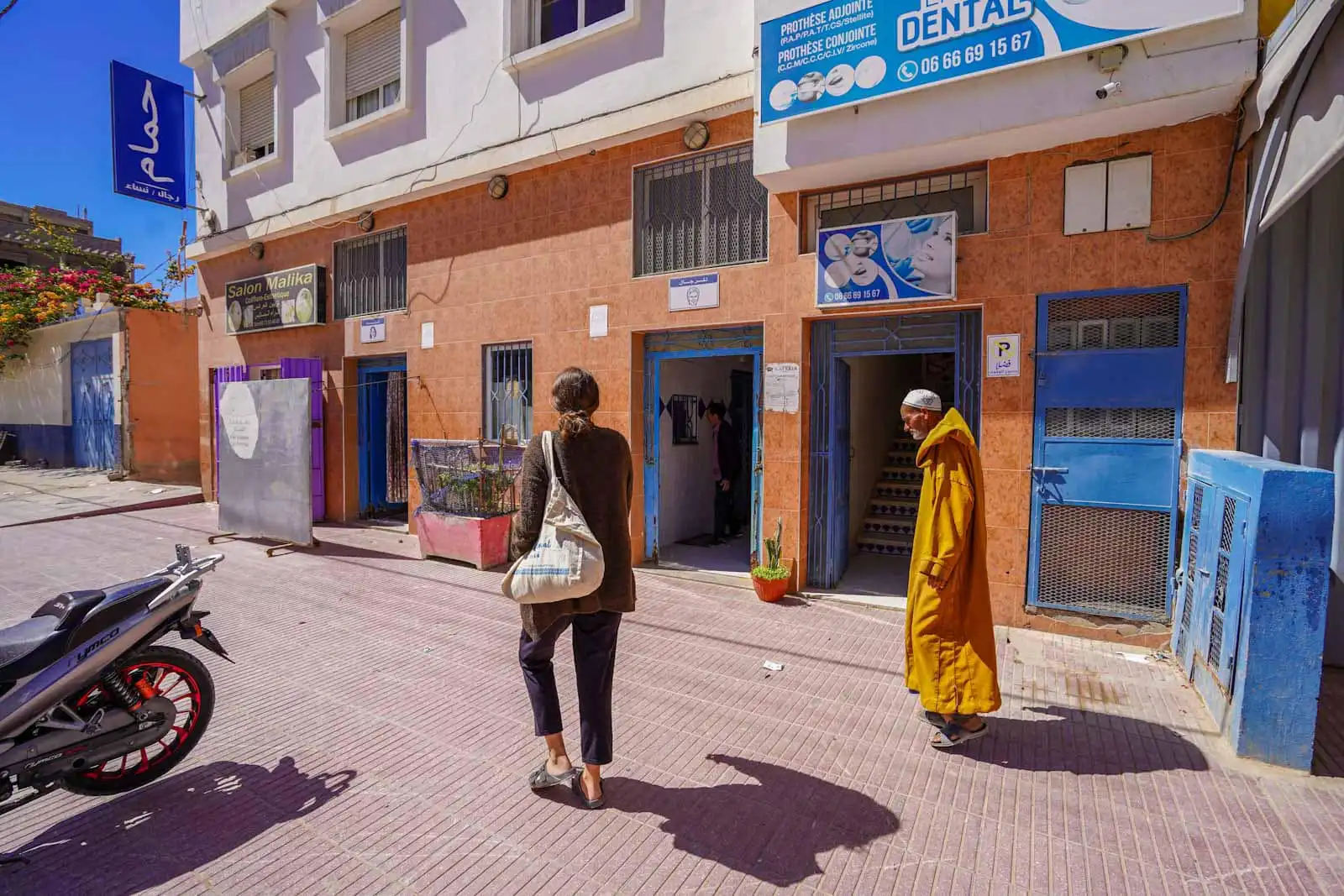
If there is one experience that defines the best experience of culture in Morocco, it isn’t the chaotic buzz of the Jemaa el-Fnaa or the scent of hot tagines wafting through the souks. It has to be the Moroccan Hammam.
Agreed, that to the uninitiated, the Moroccan Hammam can seem intimidating. There are stories of being scrubbed within an inch of your life by a formidable woman in a steamy room, or the confusion of what to wear when you’re essentially bathing with strangers. But once you step through those heavy wooden doors and feel the first wave of thick, humid air, you realize this isn’t just a bath—it’s a centuries-old social ritual, a spiritual cleansing, and the secret to the softest skin you will ever have!
It truly is an incredible – albeit unique – experience in Morocco, and one that I recommend every traveller to try.
In this guide, I’m breaking down everything you need to know about the Moroccan Hammam, from the history to the grey noodles of skin you’ll see on the floor(!), and what to wear.
Ready to be scrubbed? 🙂
What is a Moroccan Hammam?
At its simplest, a Hammam is a traditional steam bath.
Historically, because many Moroccan homes did not have private indoor plumbing, the neighbourhood hammam was a necessity for hygiene. It was the place where the community went to get clean.
A Little Bit About Hammam History
However, its roots go deeper than soap and water. The concept was adapted from Roman baths following the Arab conquest of North Africa. Over time, it evolved into a pillar of Islamic culture, closely tied to the ghusl (ritual purification) performed before prayer.
And Today?
Today, the hammam remains a vital social hub.
For Moroccan women, it’s a sanctuary where they can escape the heat of the day, catch up on local gossip, and bond with sisters and mothers. For men, it’s a space of quiet camaraderie.
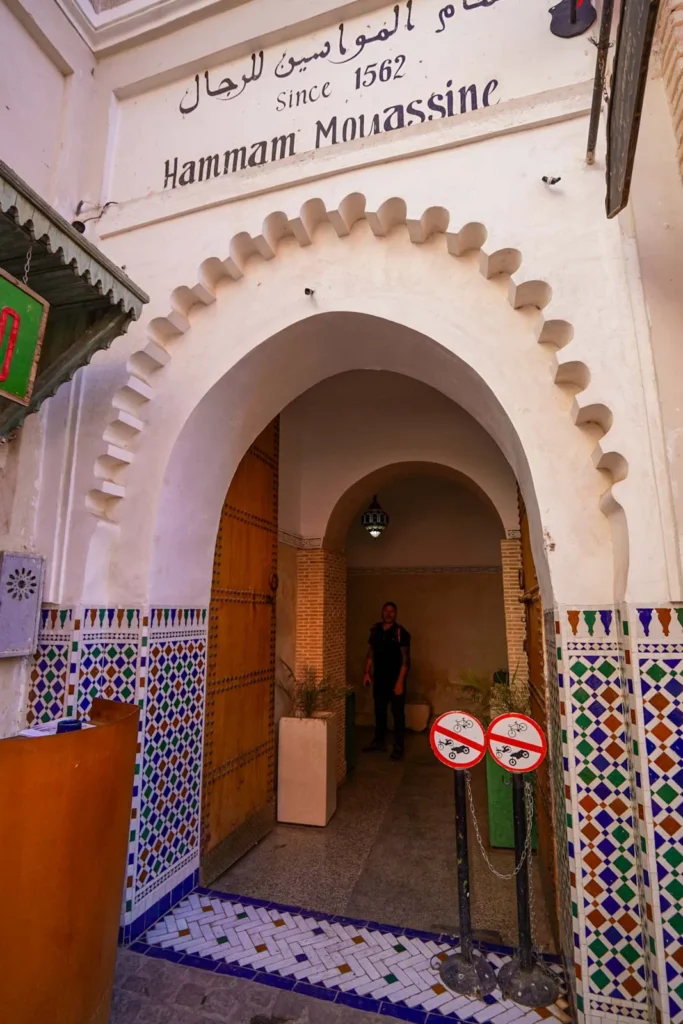
Types of Moroccan Hammam
There are two types of hammams you’ll encounter:
- The Local/Public Hammam: These are the heart of the neighbourhood. They are functional, affordable (costing about 10–20 DH for entry), and usually very basic. You bring your own supplies and often scrub yourself or pay a small fee for an attendant to do it.
- The Spa/Private Hammam: These are found in Riads and luxury hotels. They are designed for tourists, featuring dim lighting, rose petals, and high-end argan oils. While more expensive, they are a great entry-level experience if you’re nervous about the communal aspect.
How Does a Moroccan Hammam Work?
The architecture of a traditional hammam is designed around heat.
Most consist of three interconnected rooms that you move through progressively:
- The Cool Room (El Barid): This is the transition area where you undress, leave your belongings in a locker, and eventually return to cool down and get dressed.
- The Warm Room (El Wastani): The largest area, used for washing and getting your body adjusted to the temperature. This is usually where the scrubbing happens.
- The Hot Room (El Sakhoun): This room is filled with intense steam. The goal here is to sit, relax, and let your pores open up. The heat softens the layers of dead skin, prepping you for the ‘gommage’ (scrub).
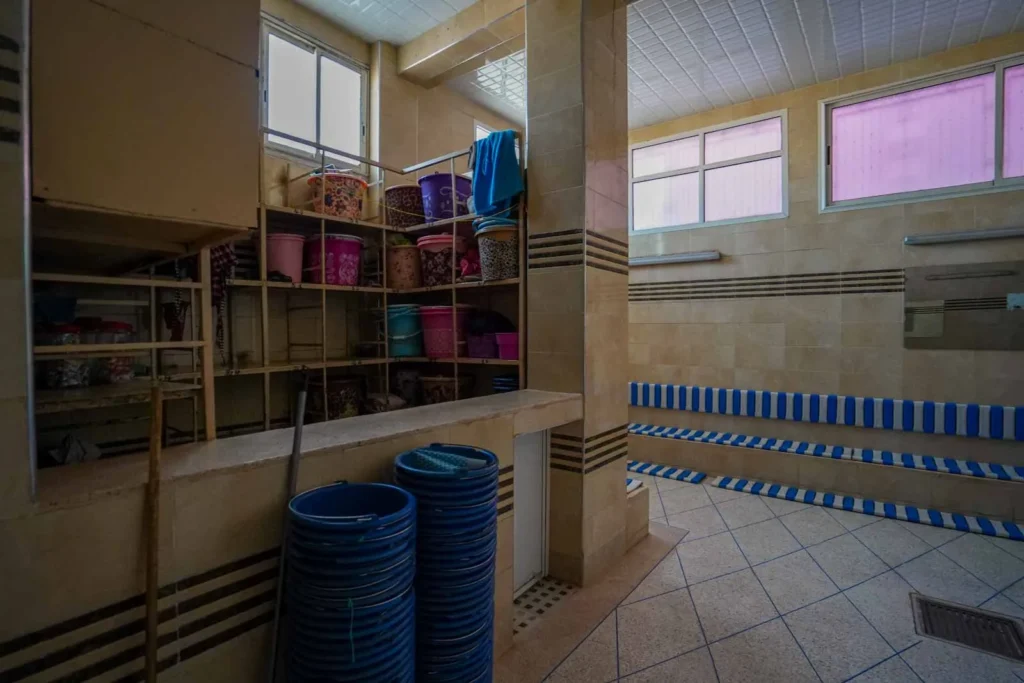
Water is managed via large marble basins and buckets. You don’t stand under a shower head; you use a small plastic scoop to douse yourself with water from a bucket. Or an attendant does that part for you.
What Do You Wear to a Hammam?
Are you fully naked in a Moroccan Hammam?
This is the number one question for Hammam first timers!
The rule of thumb is: modesty is key, but nudity is normal.
- For Women: Most Moroccan women in a public hammam will be topless, wearing only their underwear (usually a simple pair of cotton briefs). As a traveller, you can wear a bikini bottom or a pair of underwear you don’t mind getting wet and soapy. Full swimsuits are less common because the attendant needs access to your back and stomach to scrub you properly.
- For Men: Men always keep their underwear or swim trunks on. Total nudity is a big no-no for men in Moroccan culture.
As a tip, don’t wear your best silk lingerie. The black soap and vigorous scrubbing can be hard on fabrics. Bring a spare, clean pair of underwear to change into after you’re finished.
What Do You Need to Take?
If you are going to a luxury spa, they will provide everything.
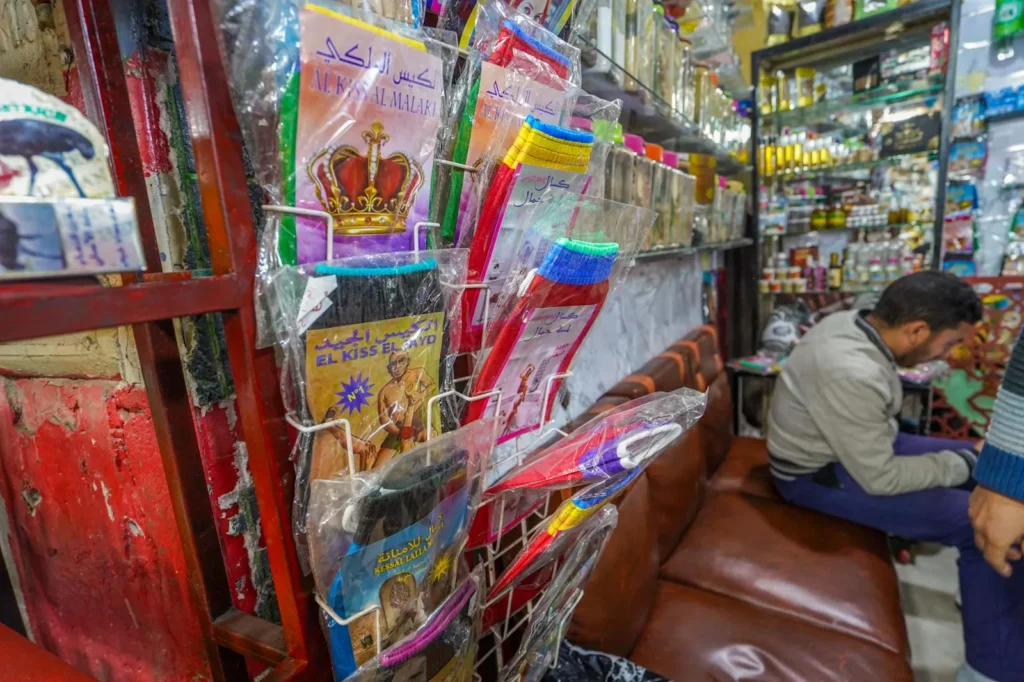
But if you want the authentic, local experience, you need to pack your ‘Hammam Kit’. You can buy these items at any local souk for a few dirhams.
- Savon Beldi (Black Soap): A thick, dark, olive-oil-based paste. It doesn’t lather like Western soap; it’s meant to sit on the skin to soften it.
- Kess (Exfoliating Mitt): This is a sandpaper-like glove. It looks harmless, but in the hands of an experienced Moroccan woman, it is a powerful tool.
- Ghassoul (Lava Clay): Often mixed with rose water, this mineral-rich clay is used as a hair or body mask at the end.
- Plastic Buckets & Scoop: Most public hammams provide these, but regulars often bring their own.
- Flip-Flops: The floors are wet and can be slippery. They are also heated from underneath, so they can get surprisingly hot!
- Towel & Change of Clothes: You’ll want loose, breathable clothes for afterward.
- Toiletries: Your own shampoo, conditioner, and a wide-tooth comb.
How Long Does It Take?
A Moroccan hammam is not something you rush. It is a slow, methodical process.
- The Quick Version: 45 minutes to an hour.
- The Traditional Way: 2 to 3 hours.
Locals often spend half a day here, lounging in the steam and chatting. If you are paying for a treatment (scrub and massage), expect to be there for at least 90 minutes.
The Two Ways to Hammam
You generally have two choices when you walk through the door:
- The DIY Approach (Self-Scrub): You pay a basic entry fee and bring your own kit (black soap, kessa glove, and bucket). You handle the scrubbing yourself.
- The Full Service (Attendant-Led): You pay for an attendant to give you a vigorous exfoliating scrub and a massage. This is highly recommended if it’s your first time—they don’t miss a spot!
The 6 Steps of the Hammam Experience
Assuming you have made the executive decision to have the full Moroccan Hammam experience and paid for a scrub (often called ‘massage’) your time starts now.
Ready?
You will be assigned to one of the female Hammam staff.
Wearing your towel, follow her into the warm room.
Step 1: The Acclimatisation
After undressing in the cool room, you’ll head into the warm room. Your attendant (or you, if you’re going solo) will douse you with several buckets of warm water. You’ll then move into the Hot Room for about 15–20 minutes. Just sit, breathe, and let the steam work its magic.
- Tip: Expect to find a warm, steamy room with an area of the wall with taps and large buckets of water, and other ladies lying, sitting and scrubbing or being scrubbed.

Step 2: The Savon Beldi
Once your skin is soft and your pores are wide open, you or your Hammam attendant apply the Savon Beldi all over your body. It feels like a thick gel. You leave this on for about 10 minutes.
The soap doesn’t clean you in the traditional sense; its high pH level helps to detach the dead skin cells from the surface. (Sorry!).

Step 3: The Rinse
You’ll be rinsed down with more warm water until every trace of the slippery black soap is gone.
This is crucial—if there is soap left on your skin, the mitt won’t be able to grip the dead skin. (Sorry, again!).
Step 4: The Scrub (Gommage)
This is the “make or break” moment. You lie down on the warm marble floor or a bench. The attendant puts on the Kessmitt and begins to scrub. They use long, firm strokes.
Don’t be alarmed when you see what looks like small grey noodles or eraser shavings piling up on the floor.
That is your dead skin.
It is both horrifying and immensely satisfying to see how much ‘old’ you is being shed! If the pressure is too much, just say “shwiya” (a little/gentle).
Step 5: The Clay Mask and Hair Wash
After the scrub, you are rinsed again. Many people then apply Ghassoul clay to their skin and hair. It draws out toxins and leaves your hair incredibly shiny.
This is also when you’ll do your final shampoo and conditioning.
Step 6: The Final Cool Down
The last rinse is often slightly cooler to close your pores. You’ll wrap yourself in a dry towel and head back to the cool room.
This is the ‘Hammam High’—a feeling of total physical lightness and mental clarity. In many riads, this is when you’ll be served a glass of hot mint tea.
Tips for Your First Visit
It really depends on the Hammam experience you are after and the location of your Moroccan Hammam as to what you need to be prepared with.
A Moroccan Hammam in Marrakech is much more used to and prepared for tourists and you don’t actually need to bring anything except a change of clothes and underwear for afterwards.
But a few tips before you go:
- Don’t Shave Right Before: The Savon Beldi and the intense scrubbing will sting like crazy on freshly shaved skin. Wait at least 24 hours.
- Stay Hydrated: The steam is intense. Drink plenty of water before you go in.
- Embrace the Lack of Privacy: In a public hammam, bodies are just bodies. No one is judging you. The women are there to clean and be cleaned; there is a beautiful, non-sexualised comfort in the communal space.
- Tipping: If you are in a public hammam and hire an attendant, a tip of 20–50 DH is standard and much appreciated.

Enjoy Your First Moroccan Hammam
The Moroccan Hammam – IN MOROCCO – is more than just a spa day. It is an incredible experience of culture as a visitor in the country.
You’ll walk out with skin like a newborn baby and a deep appreciation for the Moroccan art of slowing down (and being so openly part of the local community and culture).
Just remember: when those ‘grey noodles’ start falling, it means it’s working! 🙂
Accommodation in Marrakech
Marrakech is well known for its range of beautiful accommodation.
Here is our pick of the best range of Riads and hotels in Marrakech to choose from.
Budget Riads in Marrakech
Mid-Range Riads in Marrakech
Luxury Riads in Marrakech
Read Campsites In Morocco That We Recommend.
Travel Planning for Morocco & Beyond
These are the companies we use and can recommend for planning and booking travel.
- Booking.com – The best all-around accommodation booking site that constantly provides the cheapest and lowest rates. They have the widest selection of budget accommodation. It is easy to filter and sort into price and availability with all the extras you are looking for personally.
- 12GoAsia – Book trains anywhere online.
- Skyscanner– This is by far our favourite flight search engine. They are able to search small websites and budget airlines that larger search sites often miss. We book all our flights through Skyscanner.
- GetYourGuide– Get Your Guide is a huge online marketplace for tours and excursions offered all around the world. Everything from walking tours, to street-food tours, cooking classes, desert safari’s and more!
- SafetyWing – A global travel insurance that covers people from all over the world while outside their home country. You can buy it short or longterm; and even if you are out of the country.
- World Nomads – Travel insurance tailored for longterm travel and nomads (including those who have already left home). Make sure you have insurance before planning more for your Morocco Itinerary!
Hi! I’m Sarah. I am the self-confessed dreamer, travel-schemer and the main editor behind this blog. I love to write, and it is a dream come true to share so many experiences together and inspire others in our stories.