
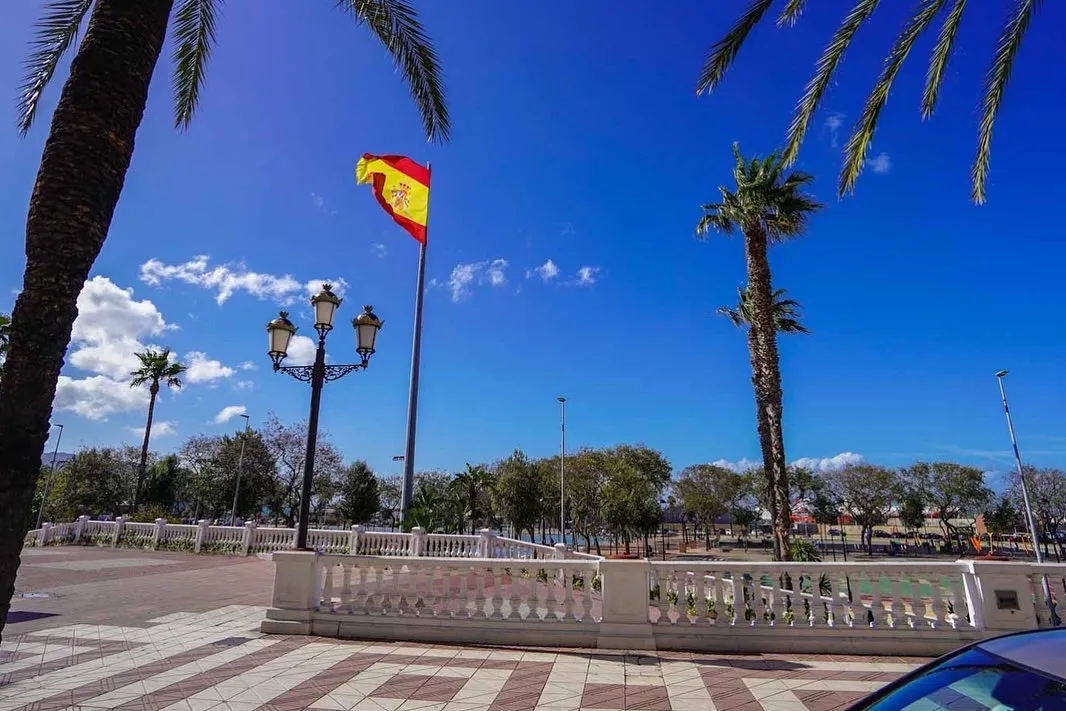
Crossing the border between Morocco and the Spanish enclave of Ceuta is a unique experience. Geographically, you are in Africa; but politically, you are in the European Union.
For overlanders, van-lifers, and road-trippers, this land border (known as the Fnideq-Ceuta Border Crossing) is a gateway that requires a bit of savvy to navigate smoothly – and patience.
In recent times, the border landscape has changed. New digital systems, upgraded inspection facilities, and shifting political climates mean that the old ‘just show up and hope’ method can lead to ridiculously long queues or being turned away.
But we did it; in our motorhome from Fnideq to Ceuta. We stayed a couple of nights and re-entered Morocco with a new 90-day Moroccan Tourist Visa (and some Spanish wine).
Here is your comprehensive guide to crossing the Morocco-Ceuta Border with a vehicle.
Why Ceuta?
Most travellers choose Ceuta for two reasons:
- Visa Runs: It is the most common way to renew a 90-day Moroccan tourist visa, which in turn can essentially extend your time out of the Schengen.
- Cheaper Ferries: Ferries from Algeciras to Ceuta are often significantly cheaper and faster (around 60 minutes) than those going directly to Tangier Med.
However, be warned: what you save in ferry costs, you might pay for in border stress. If you value your sanity over €50, Tangier Med is often more streamlined. But if you’re up for the adventure, here is how to do Ceuta like a pro.
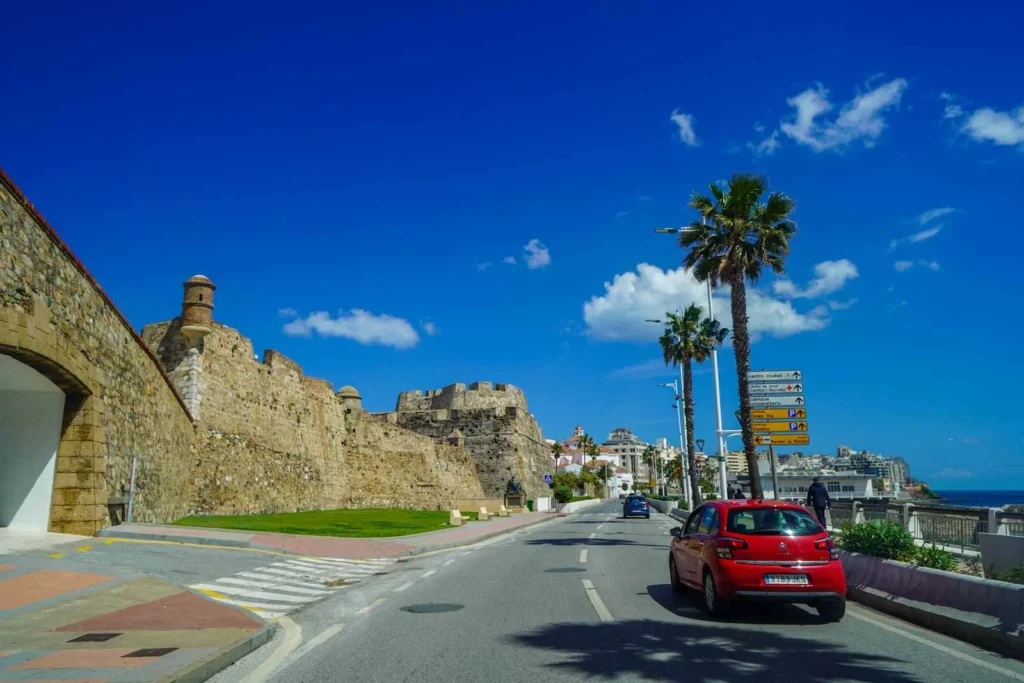
Options: Ceuta Border Crossing
If you’re planning to cross into the Spanish enclave of Ceuta from Morocco, you essentially have two ways to do it: on foot or behind the wheel.
While the process sounds straightforward, the logistics—especially regarding where you leave your vehicle—can be a bit of a trap.
1. Crossing as a Pedestrian
There is a dedicated Pedestrian Corridor that begins at the designated taxi drop-off point on the Moroccan side.
This is often much faster than the vehicle lanes, particularly during peak commuting hours or the summer Marhaba season.
The Grand Taxi Rule
If you are taking a taxi from nearby Tetouan or Fnideq to the border, you need to know which one to hail:
- Grand Taxis (Large sedans/vans): These are authorised to drive all the way to the border drop-off zone.
- Petit Taxis (Small city cars): These are not allowed access to the border area. They will drop you off further back, leaving you with a long walk.
However, do note that we crossed the border to Ceuta from Morocco with our motorhome – not as a pedestrian.
2. Crossing with Your Own Vehicle
Driving across is the standard choice for overlanders and those heading to the ferry terminal. (Albeit less about the ferry terminal and more about the chance to extend your Moroccan visa, right?).
However, the sight of a massive queue of cars makes it tempting to try a hybrid approach: parking the car and walking across to save time.
But this is where most people get stuck.
We did; and so are now speaking from experience.
If you look at Google Maps, you will see what looks like a conveniently large parking lot right at the border. Do not rely on this.
This lot is strictly reserved for border personnel, police, and customs staff.
- Tip: There is no authorised public parking at the border itself. If you attempt to leave your vehicle on the shoulder or in restricted zones, it will
likelybe towed or fined before you’ve even cleared passport control.
3. The (Only Real) Pedestrian Alternative
If you want to visit Ceuta for the day as a pedestrian but you have your own car with you in Morocco, your best strategy is:
- Drive to the nearby town of Fnideq.
- Find a secure, guarded parking lot (look for the Gardien with the high-vis vest).
- Catch a Grand Taxi from the town centre to the border crossing.
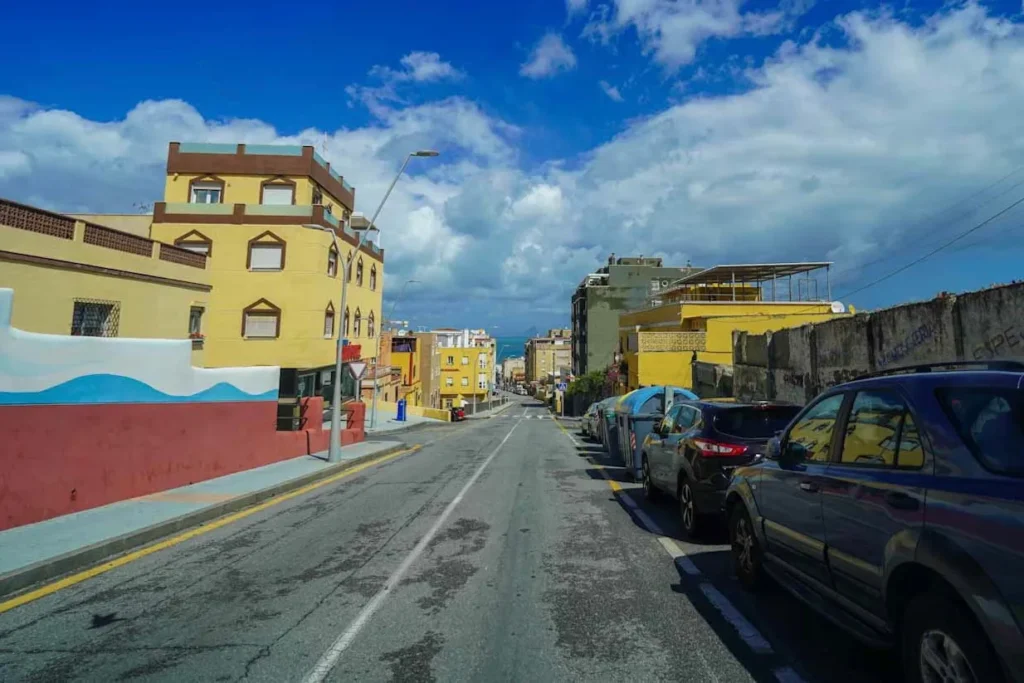
Renew Your Moroccan Visa: Ceuta Border Crossing
The Ceuta Border Crossing is commonly used to renew traveller’s Moroccan Tourist Visa.
This is possible (2026) and as above can be achieved by crossing to Ceuta on foot or with your vehicle.
- Tip: If you cross as a pedestrian and leave your vehicle in Morocco, the vehicle is still bound to 180 days maximum in Morocco.
Are you debating Travel In Morocco During Ramadan? Read all about it.
Paperwork: Ceuta Border Crossing
Before you even see the Mediterranean, ensure you have these documents in a physical folder.
Digital copies are great backups, but Moroccan and Spanish border guards still love paper.
- Passport: Must have at least 6 months’ validity.
- Vehicle Registration: The original document (no photocopies).
- Green Card Insurance: This must explicitly list MA (Morocco) as a covered territory. If your European insurer doesn’t cover Morocco, you must buy local insurance.
- Temporary Import Permit: This is the small white document (business-card size) given to you when you first entered Morocco with the car. Do not lose this.
- Authorisation Letter: If the vehicle is not in your name (e.g., a friend’s car or a company lease), you need a notarised letter of permission from the owner.
The Crossing: Morocco to Ceuta (Spain)
The Ceuta Border Crossing from Morocco is notoriously time consuming with a vehicle.
However, we had no problems crossing and can recommend it to extend your time in Morocco and to explore the beautiful city of Ceuta.
1. The Approach from Fnideq
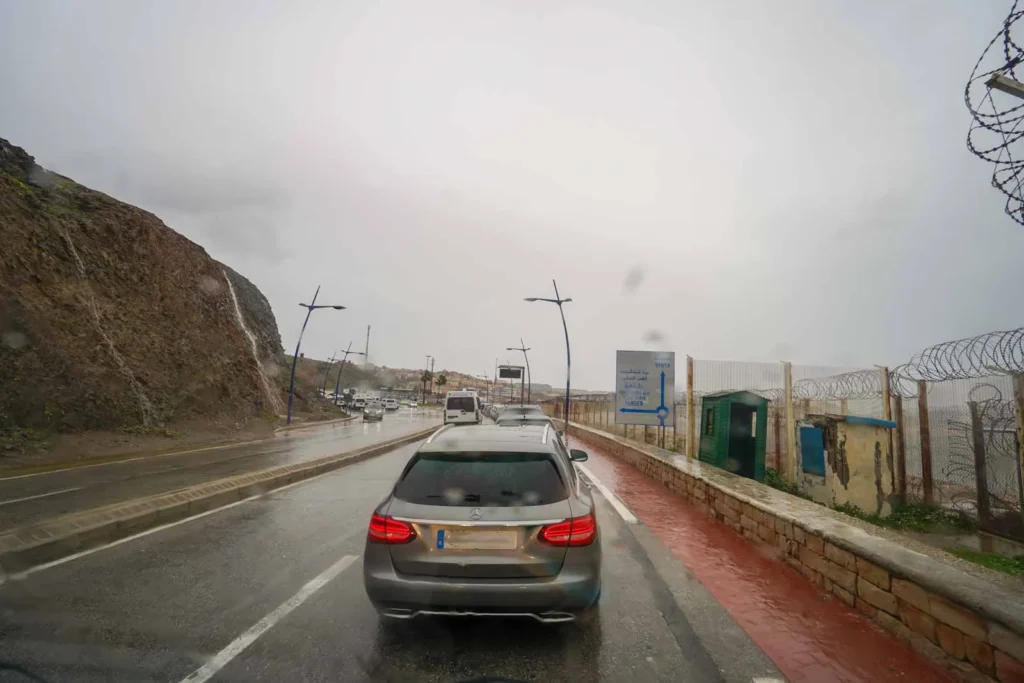
The border town on the Moroccan side is Fnideq. The road to the border (N16) is a scenic waterfront drive, but as you approach the crossing, the atmosphere changes. You will see looooong lines of cars parked on the shoulder.
- Tip: Recently authorities have implemented a ‘Waiting Area’ system at Loma Colmenar to manage congestion. We didn’t, but you can use the Embolsamiento Ceuta mobile app (available on iOS/Android) to check real-time wait times and get a digital QR ticket for your queue position.
2. Moroccan Customs & Immigration
Enter Border Control.
There are five vehicle lanes through Moroccan Customs and Immigration.
- First Check: A guard will check your passport before you enter the main control area.
- Immigration: Drive to the window. They will stamp your passport to signify you are leaving Morocco.
- Customs (The Vehicle): This is where you hand over your TIP. The officer will scan it to ‘cancel’ the car’s entry in the system.
- The Inspection: Security has been tight due to increased regional migration; expect customs dogs to sniff the exterior and interior of the vehicle.
3. Entering Spanish Ceuta
Once cleared by Morocco, you drive through a short No Man’s Land fenced corridor.
- Spanish Passport Control: The first undercover stop is for Spanish Passport Control. The Guardia Civil will check your passport. If you have an EU/UK/US passport, this is usually very fast.
- Customs: Drive forward to the next covered area for Spanish Customs.
- Exit: There is one final check before entering Ceuta.
The Crossing: Ceuta (Spain) to Morocco
Entering Morocco is generally more involved than leaving it. But the process is essentially the same in reverse.
1. Spanish Exit
Exiting Spain is usually a breeze. A quick passport check, and you’re back in the corridor.
2. Moroccan Entry
This is the fun part!
However, the lines and time is lessened so it is straightforward if you have your paperwork in order.
- Passport Stamp: Go to the immigration window. Ensure you get your entry stamp.
- Vehicle Importation: This is the most critical step. The customs officer will create a new TIP form for your car. They will link the vehicle to your passport. You are allowed 180 days per year for the vehicle in Morocco.
- The Insurance Office: If your Green Card doesn’t cover Morocco, there is a small insurance office just 200m past the customs gate on the right.
- Cost (Approx): €60 for 10 days, or ~€155 for 30 days.
Remember that you are allowed 180 days per year for the vehicle in Morocco.
Getting to Ceuta from the Border
From the border it is approximately 3.5 km to 4 km to the centre of Ceuta.
If you are entering Ceuta on foot, there are several options for transport to town:
- Bus: There is a local bus service that runs approximately every 20 minutes from the border(1 EUR).
- Taxi: There is a taxi rank with official Spanish taxis (usually white); they are metered, but it’s always good to confirm the approximate price before you pull away (approx. 8 EUR to the centre).
- Walk: The walk is roughly 40–45 minutes to the centre of town.

Frequently Asked Questions
As with any border crossing between countries, keep updated and check any changes to regulations before you plan to cross.
Can I cross with a rental car?
Most Spanish rental companies do not allow their cars into Morocco. If they do, you need a specific “Attestation” and a Green Card from them. Likewise, it isn’t likely you can take a rental car from Morocco into Ceuta and back again.
Always confirm these kind of hopes in writing with the company before booking.
What if I stay longer than 180 days?
Your personal visa is 90 days (renewable), but your vehicle is only allowed 180 days in a calendar year. If you overstay with the vehicle, the fines are heavy, and the vehicle may be seized.
Is it safe?
Yes. The border is highly regulated and heavily policed. While the atmosphere can feel intense due to the high fences and crowds, travellers are rarely targeted for anything other than a bit of paperwork confusion.
Motorhome Parking in Ceuta
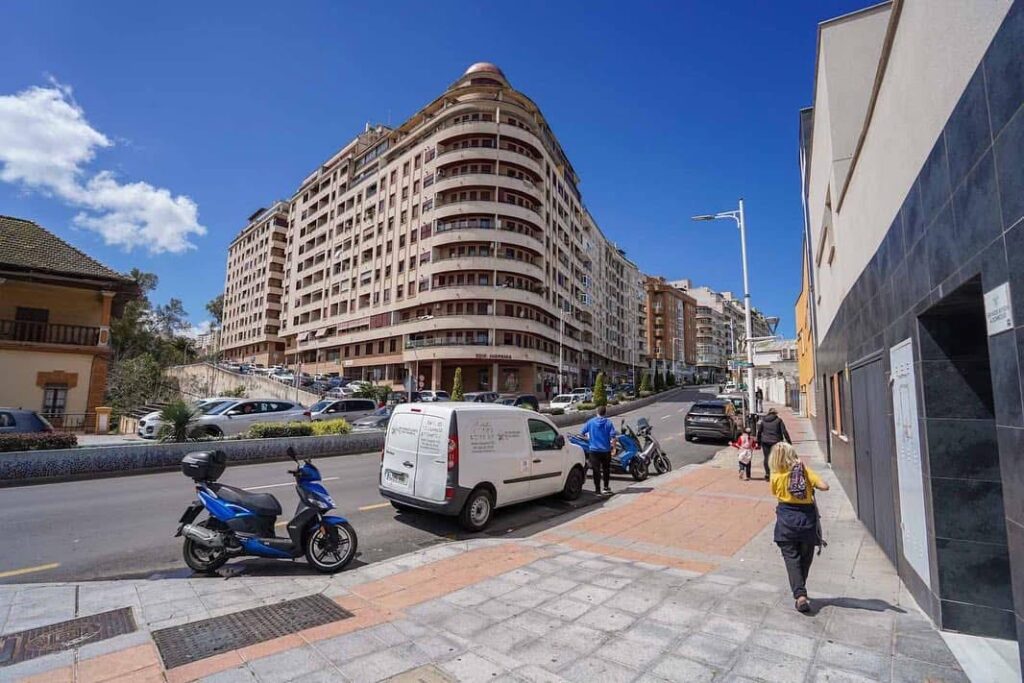
We found a great park up just 2.3km from the border.
This spot is the perfect place to decompress after the border crossing. It’s a coastal stretch that feels more like a scenic overlook than a standard parking lot!
The Details
- Location: Avenida Martínez Catena, Ceuta
- Type: Day & Night Parking
- Park4Night: #23710
- Cost: Free
- Facilities: Level parking, rubbish bins, and (the best part) outdoor showers on the beach right next to you.
Why We Recommend Staying in Ceuta
Most people view Ceuta as a transit point, but staying a night completely changed our perspective.
It was a relaxing way to wind down after a long day of crossing the border (only 5km back, I might add!).
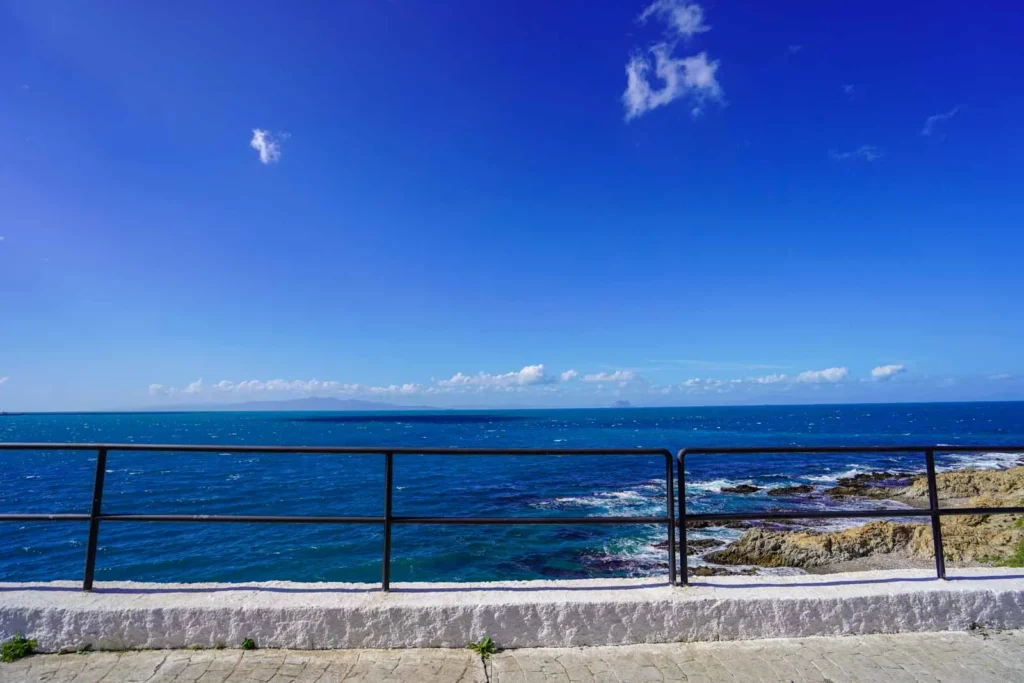
You are facing the Mediterranean with a stunning view looking back toward the Moroccan coastline. Watching the lights flicker on across the border at night is a unique experience.
Despite being close to the main road, it’s a relatively tranquil spot to sleep, especially compared to the bustle of Fnideq just over the fence. We felt refreshed and ready to explore Ceuta the next day and absolutely made the most of it.
We ended up staying another night after that!
Motorhome Parking in Morocco (Near Ceuta)
There are a great couple of motorhome Guarded Parking areas in M’diq and Martil that are within a short drive from the Ceuta Border Crossing.
1. Fnideq (N16)
If you want to be as close to the action as possible—or if you’re crossing the border first thing in the morning—this beachside parking lot is your best bet.
- Location: N16, Fnideq (Beachfront)
- Park4Night: #394682
- Cost: Approximately 20 MAD (€2) to the guardian.
You are parked right in front of a row of excellent local fish restaurants. We stayed here during Ramadan, and the atmosphere was incredible; the entire strip comes alive at sunset as locals gather for Iftar.
2. Martil (Avenue Prince Héritier)
Martil is a popular seaside resort town with wide boulevards and a much slower pace than the border zone. It’s an easy, flat drive to the Ceuta crossing from here.
- Location: Avenue Prince Héritier, Martil
- Park4Night: #138020
- Cost: Technically free, but expect to pay 20 MAD to the friendly on-site Guardian.
- Facilities: Basic parking only (no hookups or water), but there is a Carrefour Market just 800m away—perfect for stocking up on Moroccan spices before you head to Spain, or grabbing supplies if you’ve just arrived.
Very secure. Having a Guardian on-site 24/7 provides great peace of mind if you’re leaving the van to wander the promenade.
Final Thoughts?
Crossing from Morocco to Ceuta is a totally unique border crossing experience – and a very useful method for extending your Moroccan motorhome adventures!
It requires patience, a folder full of papers, and a sense of humour.
But follow the queueing rules, keep your TIP safe, and you’ll be back sipping mint tea in the Rif Mountains before you know it. 🙂
Tips For Travel to Morocco & Beyond
These are the companies we use and can recommend for planning and booking travel.
- Booking.com – The best all-around accommodation booking site that constantly provides the cheapest and lowest rates. They have the widest selection of budget accommodation. It is easy to filter and sort into price and availability with all the extras you are looking for personally.
- 12GoAsia – Book trains anywhere online.
- Skyscanner– This is by far our favourite flight search engine. They are able to search small websites and budget airlines that larger search sites often miss. We book all our flights through Skyscanner.
- GetYourGuide– Get Your Guide is a huge online marketplace for tours and excursions offered all around the world. Everything from walking tours, to street-food tours, cooking classes, desert safari’s and more!
- SafetyWing – A global travel insurance that covers people from all over the world while outside their home country. You can buy it short or longterm; and even if you are out of the country.
- World Nomads – Travel insurance tailored for longterm travel and nomads (including those who have already left home). Make sure you have insurance before planning any packing lists or wondering more tips for travelling to Morocco!
Hi! I’m Sarah. I am the self-confessed dreamer, travel-schemer and the main editor behind this blog. I love to write, and it is a dream come true to share so many experiences together and inspire others in our stories.